
Ask most people about pile driving decisions and they'll think about the hammer, the rig, or the crew. But before any of that equipment rolls onto site, one decision quietly shapes the entire foundation: what kind of pile goes into the ground. Pile type determines how the foundation carries load, how fast installation goes, what the material bill looks like, how the piles survive their environment for the next 75 years and even which hammer you can use to drive them.
There's no universally "best" pile. A steel H-pile that's perfect for punching through dense glacial till may be the wrong answer for a corrosive marine environment; a precast concrete pile that thrives in salt water may be impractical on a tight urban site with limited crane access. This guide walks through the major driven pile types steel H-piles, steel pipe piles, precast concrete, timber, and sheet piles and the real-world factors that should drive your selection.
Start With How the Pile Carries Load
Before comparing materials, remember the two ways any driven pile develops capacity: end bearing at the tip and skin friction along the shaft. Which mechanism dominates depends on the ground a topic we covered in depth in our guide to soil conditions and pile driving. Sites with a hard bearing layer at reachable depth favor end-bearing piles with strong tips; deep soft deposits favor friction piles with generous shaft surface area. Matching the pile's geometry to the soil's load-transfer behavior is the first filter in any selection everything else is refinement. For the broader context of how driven piles fit into foundation systems, our pile driving and deep foundations guide is a good companion read.
Steel H-Piles: The Hard-Driving Workhorse
Steel H-piles are rolled structural sections driven directly into the ground, and they've earned their reputation as the go-to choice for tough driving conditions. Their small cross-sectional area lets them displace very little soil, which means they penetrate dense sands, gravels, and even weathered rock where displacement piles would refuse early. Fitted with cast steel tip protection, an H-pile can be seated hard onto bedrock for exceptional end-bearing capacity.
H-piles are also the easiest pile to splice weld on another section and keep driving which makes them forgiving on sites where bearing depth varies unpredictably. Bridge foundations, industrial structures, and any project chasing a deep, hard stratum tend to land on H-piles.
Their limitations mirror their strengths: that slender profile generates less skin friction than a displacement pile, so in deep soft soils without a firm bearing layer, H-piles can require significant length to develop capacity. Steel also corrodes, so aggressive soils or marine splash zones call for coatings, sacrificial thickness, or a different material entirely. And because H-piles often see hard driving, hammer selection and stress control matter the fundamentals in choosing the right pile driver apply doubly here.
Steel Pipe Piles: Versatility in a Round Package
Pipe piles offer the strength of steel with far more flexibility in how they work. Driven open-ended, they behave somewhat like H-piles cutting through soil with a soil plug forming inside. Driven closed-ended with a flat plate or conical tip, they become displacement piles that compact the surrounding soil and develop strong friction. Fill them with concrete after driving, and they become composite structural members with excellent bending resistance a major advantage for waterfront structures, bridge fenders, and anywhere lateral loads matter.
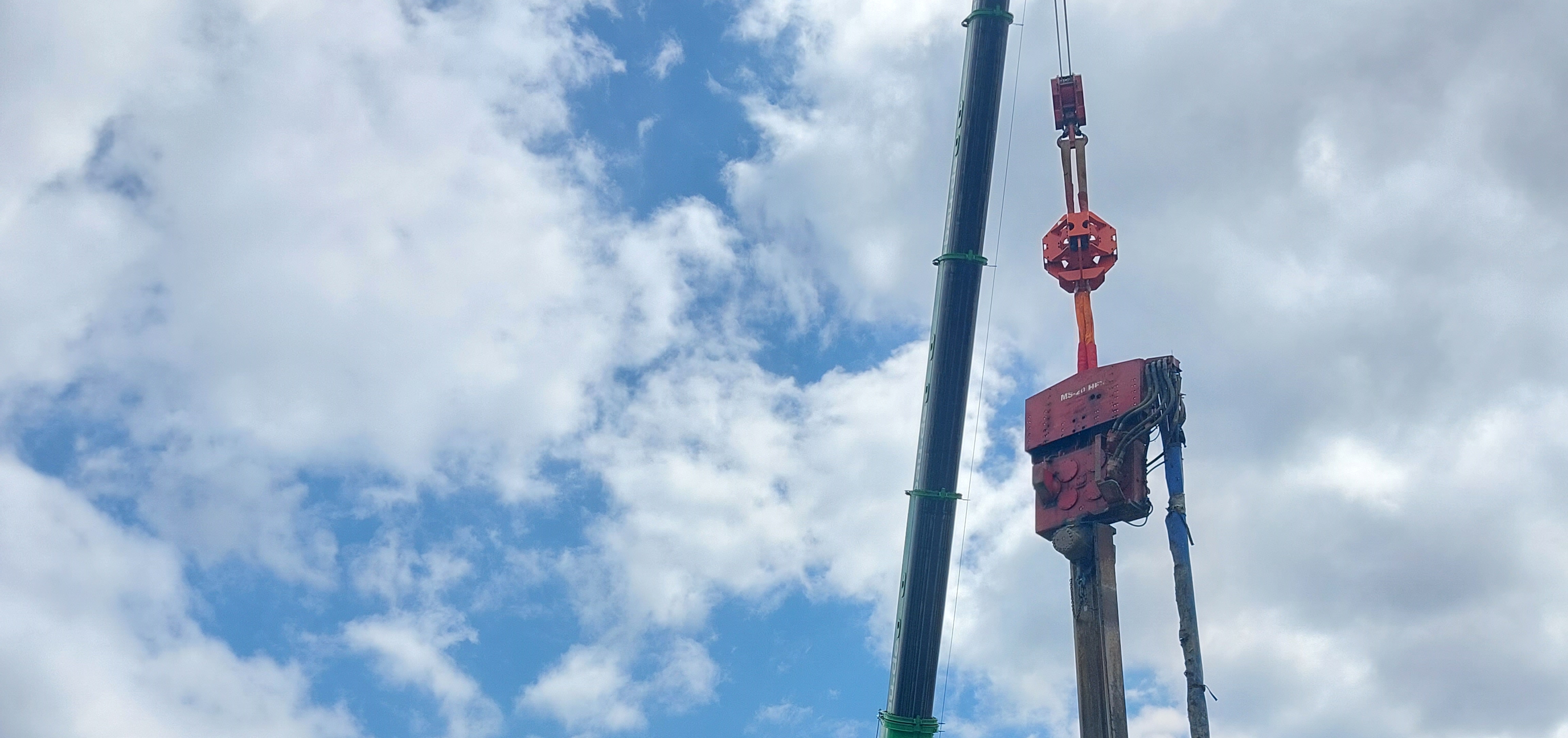
That bending capacity makes pipe piles a favorite for marine and coastal work, where waves, vessel impact, and unsupported length above the mudline all demand stiffness considerations we explored in choosing the right pile driver for coastal projects. Pipe is also well suited to vibratory installation in granular soils, where a vibratory hammer can run pipe to depth remarkably fast before final seating with an impact hammer; our vibratory hammers guide covers that workflow in detail.
Cost is the main watch-out: pipe typically carries a higher material price per foot of capacity than H-pile in hard-driving, end-bearing scenarios, so it wins on projects that actually use its versatility.
Precast Concrete Piles Durability Where Steel Struggles
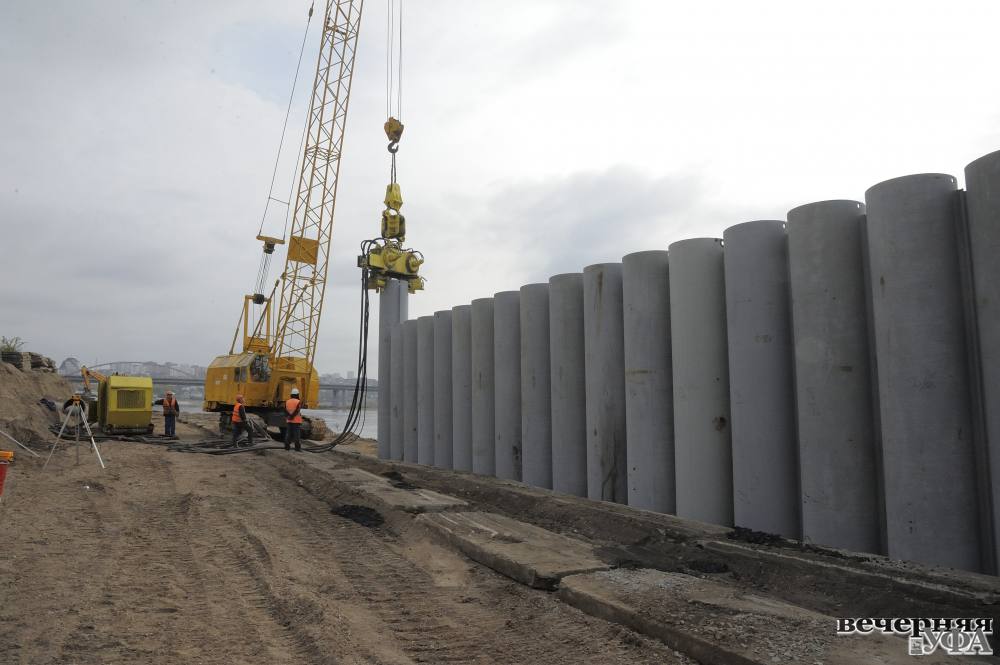
Prestressed precast concrete piles usually square or octagonal are displacement piles that excel in two situations: friction-dominated soil profiles and corrosive environments. Their large perimeter develops skin friction efficiently, and concrete shrugs off the salt water, marsh soils, and chemically aggressive ground that attack unprotected steel. That's why docks, piers, and coastal bridges across the Gulf and Atlantic coasts ride on concrete piles by the thousands.
The trade-offs are handling and adaptability. Concrete piles are heavy, require careful lifting at designated pick points, and are vulnerable to tensile cracking from overdriving or from driving through very soft layers making cushion selection and hammer control critical. Splicing is possible but far more involved than welding steel, so concrete works best where the geotechnical picture is well understood and pile lengths can be cast confidently in advance. When conditions surprise you anyway, the toolbox in our post on common pile driving challenges and solutions becomes essential reading.
Timber Piles The Original and Still Relevant
Timber is the oldest pile material in the world, and it still earns its place on the right project. For light structures boardwalks, small docks, residential foundations in soft soils — treated timber piles are economical, easy to handle, naturally tapered for good friction development, and driven quickly with modest hammers. Fully submerged below the permanent water table, untreated timber can last for centuries.
The limits are firm: capacity tops out well below steel or concrete, lengths are constrained by what trees provide, splicing is impractical, and the wet/dry cycling zone invites decay and marine borers without proper treatment. Timber is the right answer more often than people assume just for a specific class of projects.
Sheet Piles When the Job Is Holding Back, Not Holding Up
Sheet piles solve a different problem: instead of carrying vertical structural load, interlocking steel sheets form continuous walls for excavation support, cofferdams, seawalls, and flood protection. Selection revolves around section modulus (bending strength), interlock integrity for water-tightness, and drivability in the site soils. Sheets pair naturally with vibratory hammers, especially in urban settings where noise and vibration are constraints — the same driver behind the trends in our post on modern vibratory hammers and urban pile driving. If your project needs both a retained excavation and bearing piles, the two systems are frequently designed and driven together.
The Selection Checklist Six Questions That Decide It
When engineers and contractors sit down to pick a pile type, the decision usually falls out of six questions:
1. What does the soil profile demand? Hard layer at depth H-pile or open pipe. Deep soft soils displacement piles (concrete, closed pipe, timber) for friction.
2. What loads and in which directions? Heavy axial loads point to steel or concrete; significant lateral or bending loads favor concrete-filled pipe.
3. How aggressive is the environment? Marine splash zones and corrosive soils push toward concrete or heavily protected steel; permanent submersion opens the door to timber.
4. What can the site accommodate? Crane capacity, headroom, access, and noise/vibration limits can eliminate options before engineering does.
5. How certain are pile lengths? Variable bearing depth favors easily spliced steel; well-defined profiles suit precast concrete.
6. What does the local market supply? Regional availability and mill lead times routinely swing the economics between otherwise equivalent options.
Run every candidate pile through those six filters and the field usually narrows to one or two clear answers then drivability analysis and cost comparison settle it. And whichever pile wins, verify the assumption in the ground: driving criteria, monitoring, and testing turn the selection into proven capacity, supported by the instrumentation practices in our post on vibration monitoring and pile driving safety.
Match the Pile to the Project and the Hammer to the Pile
Pile selection and equipment selection are two halves of one decision. Every pile type has an ideal driving system: H-piles seated on rock need controlled impact energy; pipe and sheets fly with vibratory hammers; concrete demands careful cushioning and stress management. Getting that pairing right protects the pile, the schedule, and the budget and keeping that equipment in peak condition, as covered in maintaining pile driving equipment, protects everything else.
Pile Driving USA supplies the impact hammers, vibratory hammers, power packs, and accessories to drive every pile type in this guide from timber fender piles to heavy steel sections. Explore our equipment or contact our team to match the right driving system to the pile your next project demands.