
When most people outside the foundation construction industry think about pile driving, they picture bearing piles being installed for building foundations or bridge supports. Vertical steel or concrete members driven into the ground to carry structural load downward. This is the most visible and most discussed form of pile driving, and it represents a significant portion of the industry's work.
Sheet pile driving is a different application with different objectives, different pile geometry, different installation techniques, and different equipment considerations that experienced pile driving contractors understand and that contractors entering the sheet pile market need to learn before the first pile goes in the ground.
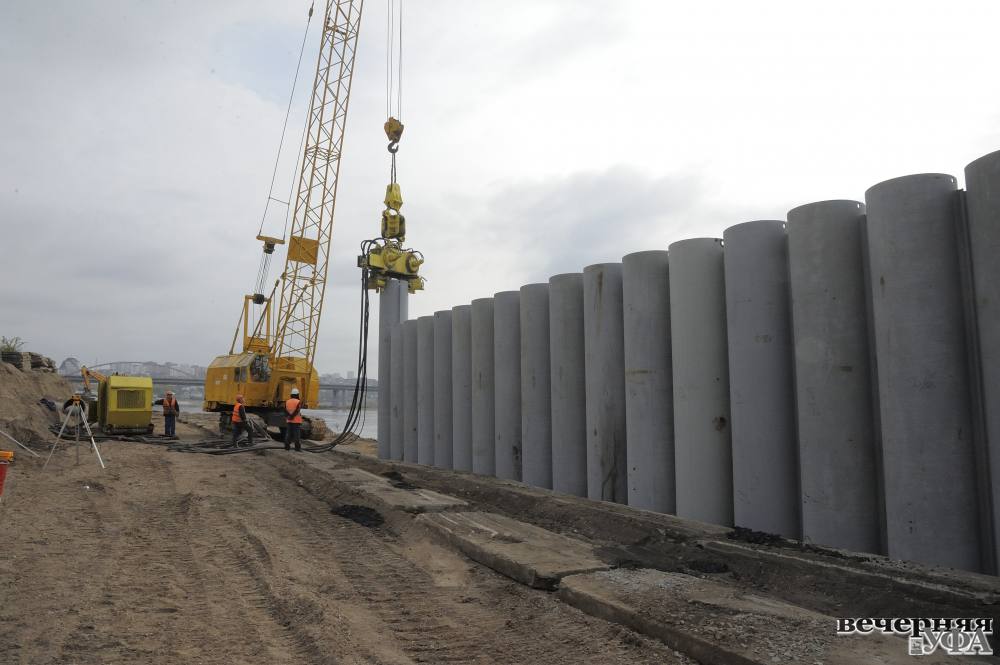
Sheet piles are interlocking flat or corrugated steel sections that are driven side by side to form a continuous wall in the ground. The wall created by this interlocking sequence provides lateral earth retention or water cut-off rather than vertical bearing capacity. The structural work that sheet pile walls do is horizontal resistance to soil and water pressure rather than the vertical load transfer that bearing piles provide.
Understanding this fundamental difference in structural function is the starting point for understanding why sheet pile installation has its own equipment requirements and why the approach to a sheet pile project is different from the approach to a bearing pile project even when some of the same equipment is involved.
Where Sheet Pile Is Used
The applications for sheet pile walls span a wide range of construction types and project environments. Understanding the full application range helps contractors identify where sheet pile capability creates market opportunity and helps project owners recognize when sheet pile is the appropriate solution for their specific site conditions.
Cofferdams for Marine and Bridge Construction
A cofferdam is a temporary structure that excludes water from a work area so that construction can proceed in dry conditions. Cofferdams are essential for bridge pier construction, dam repair, pipeline river crossings, and any project where the permanent structure must be built in a location that is normally underwater.
Sheet pile cofferdams are installed around the perimeter of the work area, typically with a rectangular or circular plan depending on the geometry of the work that needs to be accomplished inside. The interlocking sheet piles form a continuous wall that holds back water and allows dewatering inside the cofferdam. When the work inside the cofferdam is complete, the sheet piles are extracted and reused on the next project.
The combination of marine environment, water pressure loads, and the temporary nature of cofferdam construction creates specific equipment requirements. The pile driver must be capable of working over or adjacent to water, must achieve the penetration required for adequate cofferdam sealing against the water pressure head, and must be capable of pile extraction after the project is complete.
Waterfront Retaining Structures
Waterfront bulkheads, seawalls, and quay walls use sheet pile to retain the soil behind the waterfront structure while resisting the lateral pressures from soil loading and wave action. These are permanent structures designed for long service lives in aggressive marine environments.
Sheet pile waterfront structures are common along navigable rivers, in commercial harbors, at marina facilities, and along coastal development where land meets water and where the interface between terrestrial and aquatic environments requires a structural solution for bank stability and usable waterfront access.
The pile penetration requirements for waterfront retaining structures reflect the design loads they must carry throughout their service life. A sheet pile bulkhead supporting significant soil load and subject to wave and tidal action requires penetration that develops adequate passive resistance in the soil behind and below the pile toe. This penetration requirement, combined with the often-challenging soil conditions in waterfront and marine environments, places significant demands on the pile driving equipment.
Slope Stabilization and Landslide Repair
Sheet pile walls are used in highway and railway embankment stabilization, landslide repair, and slope protection applications where the wall must resist active earth pressure from potentially unstable soil masses above. These applications often occur in locations with access constraints and challenging installation conditions that require compact, maneuverable equipment.
The FR series hydraulic pile drivers that Pile Driving USA manufactures address the access constraints of many slope stabilization projects because their compact footprint and hydraulic power train allows installation work in locations where larger conventional pile driving equipment cannot be positioned effectively. The combination of adequate driving capacity and operational flexibility is more important in slope stabilization applications than raw peak energy output.
Temporary Excavation Support
Sheet pile walls provide temporary excavation support for building foundations, utility trenches, and below-grade structure construction in urban environments where open-cut slopes are not feasible due to space constraints or proximity to existing structures.
Temporary sheet pile shoring in urban construction is one of the applications where noise and vibration control are most critical alongside driving performance. Urban excavation support projects occur adjacent to occupied buildings, near vibration-sensitive infrastructure, and in environments where community acceptance of construction activity is contingent on limiting noise and vibration to defined levels.
The urban pile driving environment and how modern hydraulic pile drivers address the noise and vibration requirements of city construction projects is covered in the article on modern vibratory hammers for urban pile driving applications. Sheet pile installation for urban excavation support is one of the primary applications where these urban-optimized approaches deliver their most significant value.
How Sheet Pile Differs From Bearing Pile in Installation
The installation of sheet pile involves considerations that are distinct from bearing pile installation even when the same type of pile driver is used for both applications.
Interlock Management
The most distinctive aspect of sheet pile installation is managing the interlock between adjacent piles throughout the driving sequence. Each sheet pile section has male and female interlocking profiles along its edges that engage with the adjacent sections to form the continuous wall. Maintaining interlock engagement while driving requires that the pile being installed does not deflect out of position relative to the previously installed section during driving.
Interlock damage from driving a sheet pile that has drifted out of the interlock is one of the most common problems in sheet pile installation and one of the most expensive to correct. A pile that breaks or loses interlock engagement mid-drive requires extraction and reinstallation, which is a time-consuming and costly operation. Maintaining proper alignment and driving technique to prevent interlock damage is a fundamental skill in sheet pile installation that is distinct from the technique for bearing pile.
Driving in Panel Sequences
Experienced sheet pile contractors install piles in panel sequences rather than completing each pile to final grade before starting the next. In a panel sequence, multiple piles are advanced partially into the ground, maintaining interlock and alignment across the panel before any single pile is driven to full depth. This approach distributes the lateral forces of driving more evenly across the installed piles and reduces the tendency for individual piles to drift or rotate during installation.
The specific panel sequence for a particular project depends on the soil conditions, the pile section geometry, and the length of the wall being installed. Projects in cohesive soils that resist lateral pile movement can use different panel sequences than projects in loose granular soils where individual piles are more prone to walking or rotating during driving.
Pile Section Selection
Sheet pile sections are available in a range of section moduli, weights, and interlock configurations that must be matched to the design loads, installation conditions, and corrosion environment of the specific project. The structural engineer's selection of the pile section provides the foundation for understanding what driving equipment and technique is required to install that section to the specified depth in the site's soil conditions.
Heavier sections require more driving energy to achieve the same penetration rate in equivalent soil conditions. Longer piles require equipment with adequate follower capacity or lead configuration to handle the extended pile length without guide and alignment problems. And corrosive environments including marine and industrial sites may require specific pile steel grades or coatings that affect handling and driving procedures.
The relationship between soil conditions and the pile driving equipment requirements they create, which applies to sheet pile installation as much as to bearing pile installation, is covered in the article on soil conditions and pile driving and how subsurface conditions affect equipment selection.
Hydraulic Pile Drivers for Sheet Pile Installation
The FR series hydraulic pile drivers from Pile Driving USA are applicable to sheet pile installation across the range of section sizes and project types that the US market involves.
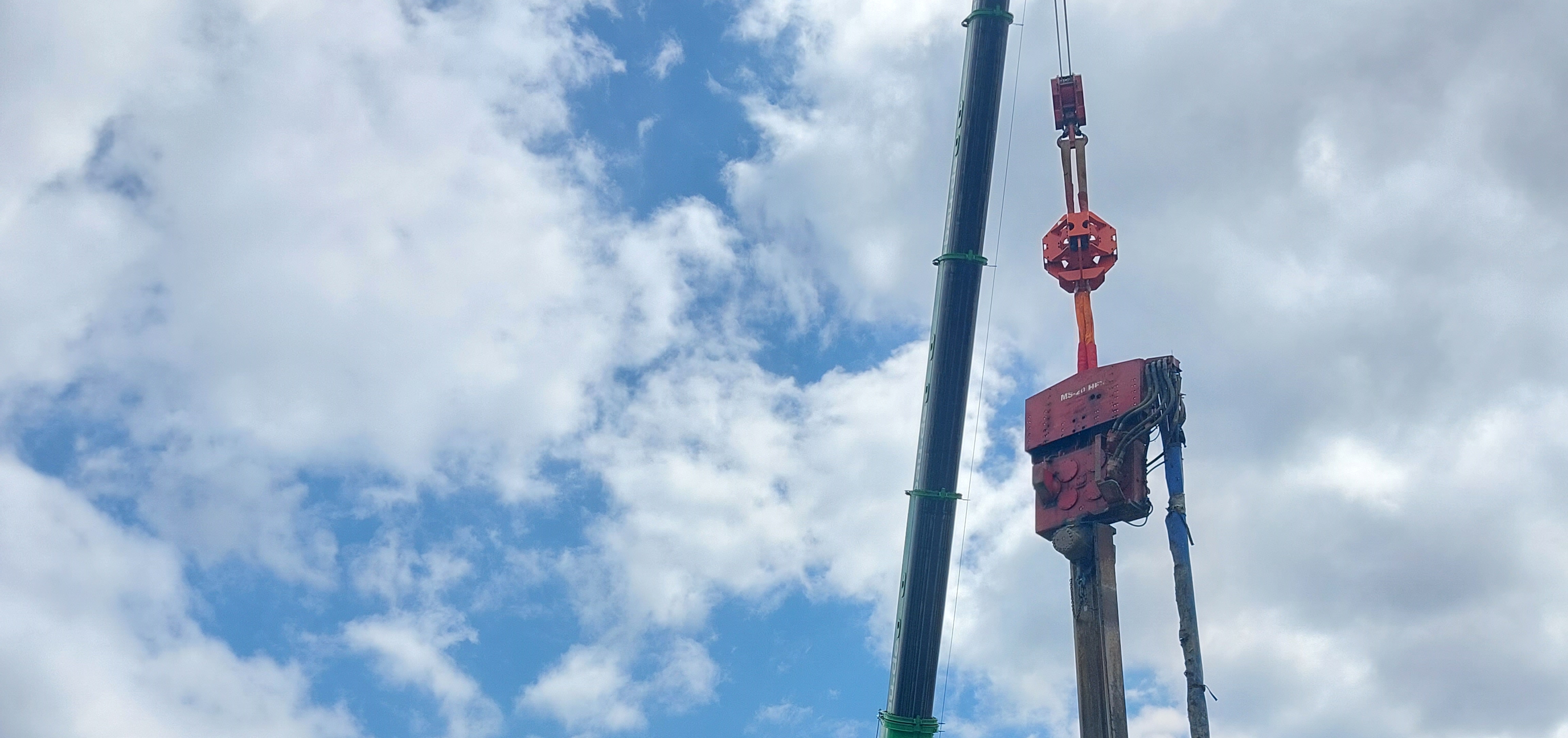
Hydraulic pile drivers for sheet pile work provide the controlled, adjustable energy output that sheet pile installation requires for managing interlock and preventing pile damage. Unlike vibratory hammers that install sheet pile through oscillatory vibration rather than impact, hydraulic impact pile drivers install sheet pile through controlled blows at a defined energy level and rate.
The choice between vibratory and impact installation for sheet pile depends on the soil conditions, the pile section, and the required installation speed. Vibratory installation is faster in granular soils where the vibration effectively reduces soil resistance around the pile, but vibratory installation is less effective in cohesive soils where impact driving provides better penetration and final set.
Many sheet pile projects use a combination approach: vibratory driving for initial penetration through easier overlying soils, transitioning to hydraulic impact driving when soil resistance increases or when final set in competent material is required. This combination approach allows the speed advantages of vibratory driving in favorable conditions while providing the penetration capability of impact driving where the soil demands it.
The comparison between hydraulic and vibratory pile driving approaches, including the specific conditions where each method is appropriate, is covered in the article on hydraulic versus vibratory pile drivers and how to choose the right approach for your project.
The Low Noise Advantage for Urban Sheet Pile Work
Pile Driving USA's FR series hydraulic pile drivers operate at 83 dB, which is a significant noise advantage for urban sheet pile projects where noise ordinances and community relations both require minimizing construction sound levels. Urban excavation support and cofferdam projects in densely populated areas, adjacent to hospitals or schools, or in neighborhoods with active noise complaints about construction activity benefit from this low-noise characteristic in ways that conventional pile driving equipment cannot provide.
The quiet pile driving capability that addresses urban noise constraints and the market opportunities it creates for contractors who can offer genuinely low-noise installation is covered in the article on quiet pile driving solutions for urban and noise-sensitive projects in the USA.
Pile Extraction After Sheet Pile Projects
Temporary sheet pile installations, including cofferdams and temporary excavation support, require extraction after the permanent work they enabled is complete. Pile extraction is a significant operational consideration that affects both the equipment required and the project cost structure.
Hydraulic pile drivers with extraction capability use the same hydraulic system that drives the pile in reverse to extract it after the project is complete. Vibratory hammers are particularly effective at extraction because the vibration that reduces soil resistance during installation also reduces it during extraction.
Pile extraction from cohesive soils that have consolidated around the pile during the construction period may require breaking the pile free with impact energy before vibratory extraction becomes effective. Hydraulic impact pile drivers that can be rigged for extraction work provide this breakout capability that vibratory-only equipment cannot deliver.
The extraction capability of pile driving equipment is an important consideration when evaluating equipment for temporary sheet pile applications. Equipment that cannot effectively extract the sheet pile at the end of the project leaves the contractor with the choice of abandoning the piles, which eliminates their reuse value, or incurring additional extraction equipment mobilization costs that were not in the original project estimate.
Vibration Monitoring for Sheet Pile Installation
Sheet pile installation near existing structures, utilities, and sensitive infrastructure requires the same attention to vibration monitoring that any pile driving near sensitive receptors requires. The continuous nature of sheet pile walls and the multiple pile installations required to complete a wall create cumulative vibration exposure that must be managed throughout the installation sequence rather than for a single event.
Pre-installation vibration surveys of adjacent structures document their condition before pile driving begins, establishing the baseline against which any damage claims can be evaluated. Continuous vibration monitoring during installation provides the real-time data that allows installation parameters to be adjusted when measured vibration levels approach the limits established by the project specifications or regulatory requirements.
The vibration monitoring program that protects both the adjacent structures and the pile driving contractor throughout an installation project is covered in the article on vibration monitoring for pile driving safety and structural protection.
Getting Started With Sheet Pile Projects
Pile Driving USA serves foundation contractors, marine construction companies, and civil contractors across the United States with FR series hydraulic pile drivers suitable for sheet pile installation across the range of project types the market involves.
For contractors evaluating sheet pile capability for the first time, the conversation with Pile Driving USA starts with the specific project type, the anticipated pile sections and lengths, the soil conditions if known, and the noise and vibration requirements of the project environment.